Cornish Pasties by Post: The Official Story of the Cornish Pasty
There is something unusually reassuring about a Cornish pasty. It is practical food, made to be held in the hand, eaten without ceremony, and remembered long after the last bite. For plenty of people, the first real one arrives on a holiday in Cornwall, bought hot and wrapped in paper. For others, especially those who live too far away to pick one up fresh, the search starts with cornish pasties online or the growing trade in cornish pasties by post.
Before the shopping side of it, though, there is the bigger question. What exactly makes a Cornish pasty a Cornish pasty, officially, not just affectionately? That matters more than many people realise. This is not simply a regional snack with a famous name. “Cornish Pasty” is a protected food name with a formal specification behind it, and that legal protection tells a rich story about place, history, and continuity.
The official story is worth knowing because it explains why the pasty is not just associated with Cornwall, but tied to it.
More than a recipe, a protected name
The clearest place to begin is with the name itself. “Cornish Pasty” is officially protected as a Protected Geographical Indication, often shortened to PGI. The original registration was made in the EU on 23 July 2011, and the UK registration date is 31 December 2020. Those dates are not decorative bureaucracy. They mark the point at which the name received formal recognition as a product whose identity depends on where it is made and how it is made.
That means not every pasty can be called a Cornish pasty. The protected name applies only to pasties made in Cornwall and made in line with the registered specification. This is the part that often gets blurred in everyday conversation. People use “Cornish pasty” loosely, especially outside the South West, to mean almost any savoury folded pastry. Officially, that is not good enough.
The protection exists to stop the name being detached from the place that gave it meaning. Cornwall is not an optional flourish in the title. It is the foundation of the title.
For anyone ordering cornish pasties by post, this point is especially useful. If a business says it is selling authentic Cornish pasties, the real question is simple: are they made in Cornwall, and do they meet the protected specification? If the answer is no, they may still be decent pasties, but they are not the protected product.
The shape, the filling, the identity
Officially, the traditional Cornish pasty is described as having a D shape, made from pastry with a crimped edge, and filled with beef, potato, onion, and swede, sometimes referred to as turnip depending on local usage. Those details are not random habits that happened to stick. Together, they create the basic identity of the product.
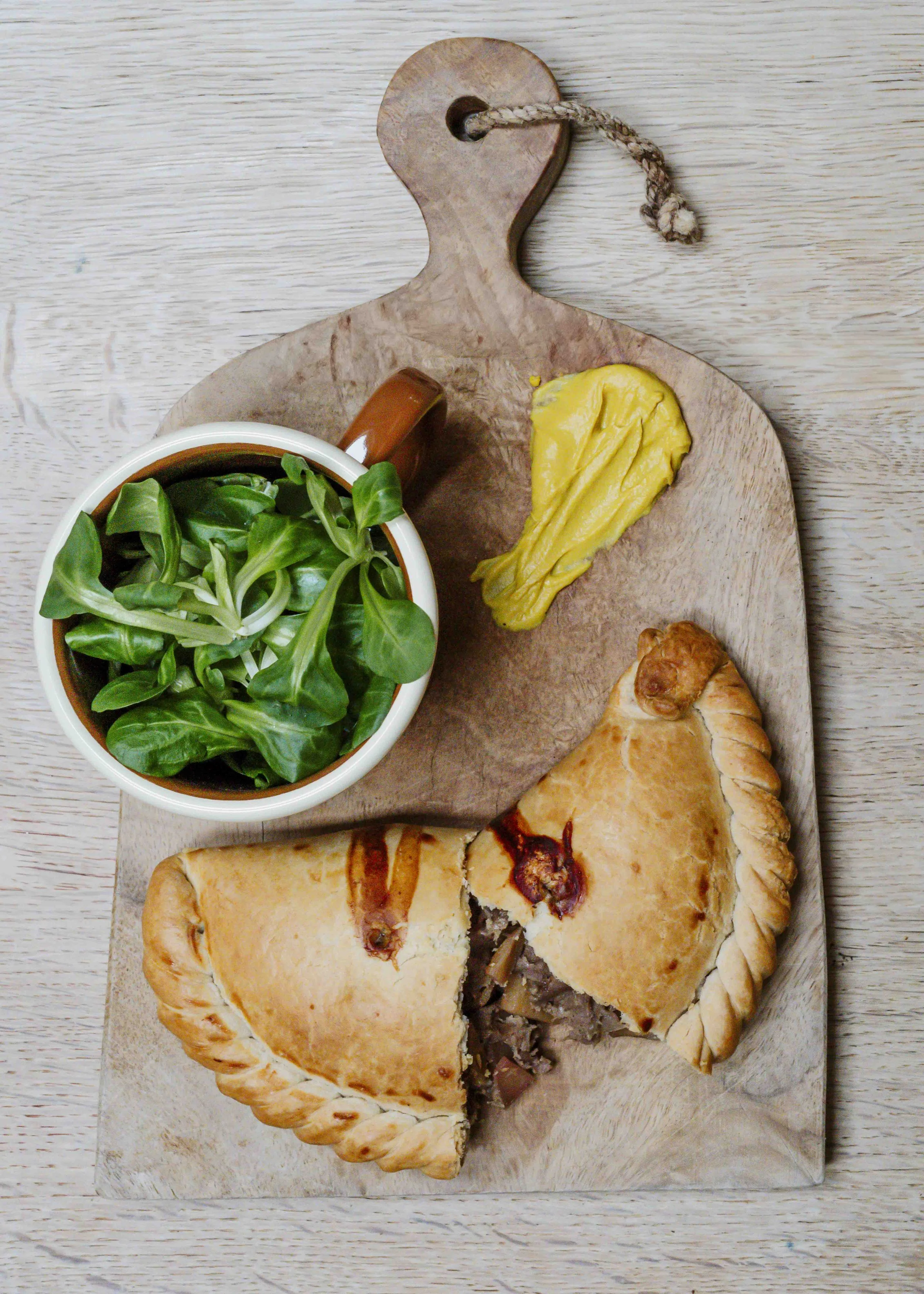
The shape matters because it is part of the recognisable form. So does the crimp. So do the ingredients. Strip away too much of that and you no longer have the official article, however pleasant the result may be. A steak slice, a cheese turnover, or a generic meat pasty can all be enjoyable in their own right, but the official Cornish pasty has a tighter definition.
This is often where modern buying habits meet older food traditions. Browse cornish pasties online and you will quickly see how eagerly sellers use the language of authenticity. Some mean it carefully, others more loosely. The official story gives consumers a good filter. A proper Cornish pasty is not just pastry folded over a savoury filling. It is a specific protected food with a specific regional claim.
That clarity also helps with another common question, especially now that plant based baking is so widespread. Can a vegan cornish pasty be an official Cornish Pasty under the protected specification described by the government material? Based on that official description of the traditional filling, the answer is not straightforwardly yes. The protected product is tied to beef, potato, onion, and swede inside the characteristic pastry form. A vegan cornish pasty may be inspired by the tradition, and it may be delicious, but it does not automatically follow that it fits the official protected definition. If a bakery offers one, the careful wording matters.
That distinction is not nitpicking. Protected food names only mean something if the boundaries are respected.
A food with deep roots in Cornwall
One of the strongest parts of the official account is that it does not present the Cornish pasty as a recent branding exercise. The product specification places the pasty within Cornish culinary heritage by the 16th and 17th centuries, with the food firmly established as Cornish by the 18th century. That is a long history, and it matters because it shows continuity rather than fashion.
The official material also points to historical evidence, including Worgan’s Agricultural Survey of Cornwall from 1808, as support for the pasty’s place in Cornish food tradition. At the same Cornish Pasties Near Me time, it acknowledges something very familiar in old regional cooking: recipes were often passed down orally. That detail rings true to anyone who has spent time around inherited food traditions. Some dishes survive not because they were written down in neat household manuals, but because people made them over and over again, teaching by feel, memory, and correction.
You can almost hear the kind of instruction that never makes it into formal recipe books. Enough onion for sweetness, enough swede for body, pastry that can hold together, a crimp that feels right in the hand. The official documentation does not romanticise this too heavily, but it does recognise that oral transmission was part of the story.
That matters because heritage foods are often misunderstood. People sometimes expect a single original recipe, dated and signed, as though every traditional dish appeared fully fixed in one moment. Real food history is usually messier than that. The strength of the Cornish pasty tradition lies not in one surviving sheet of instructions but in the steady presence of the food in Cornish life across centuries.
Why it became a staple
The official specification is very clear about the practical role the pasty played. It became a staple food for working families, miners, and farmworkers because it was portable, durable, and nourishing. That short description explains almost everything about why the food lasted.
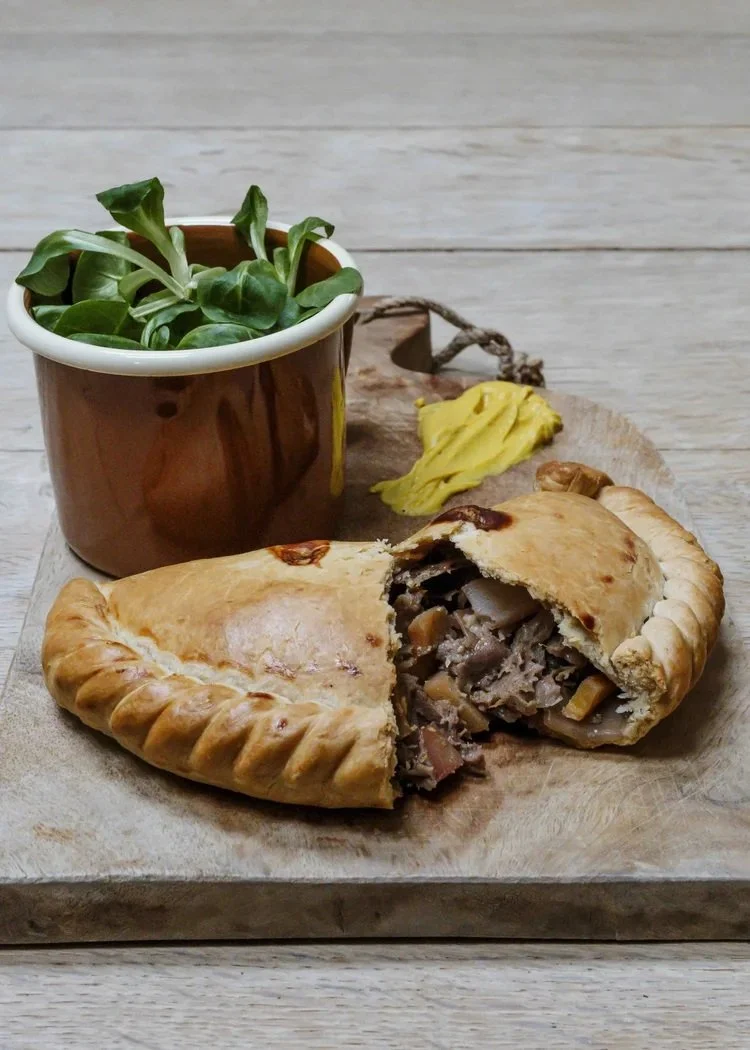
Portable means it could be carried. Durable means it could withstand the journey and the working day. Nourishing means it did the job expected of it. Those are not glamorous qualities, but they are the qualities that build food traditions with real staying power. Foods rooted in labour tend to survive because they solve ordinary problems well.
This is part of why the Cornish pasty still feels convincing today. Even when bought as a treat, it carries the logic of a working meal. It is self contained. It is structured. It feels complete. There is no need to overstate that into myth. The official story already gives enough. It was useful, filling food for people who needed useful, filling food.
That practical history also explains why people remain so attached to having the real thing sent out across the country. The rise in demand for cornish pasties by post is modern, but the appeal behind it is old. People want food that travels well, arrives with its identity intact, and still feels like proper sustenance rather than a novelty purchase. The pasty suits that role rather well.
The miners’ handle, history and caution
No discussion of the Cornish pasty stays away from the crimp for long. The familiar story is that the thick crimped edge acted as a handle for tin miners, allowing them to hold the pasty without touching the filling. The government press material links this to arsenic contamination in the mines, adding that the crust would then be discarded. It is a powerful image, and one reason the story persists is that it makes immediate sense of the shape.
At the same time, the official product specification presents this as one of several traditional stories about the shape. That is an important difference in tone. Pasties by Post It does not dismiss the idea, but it does stop short of pretending there is one simple, final explanation for every detail of the pasty’s form.
That kind of caution is healthy. Food history attracts tidy legends, and the best official accounts usually separate what is strongly documented from what survives as longstanding explanation or belief. Here, the sensible position is to recognise the handle story as deeply embedded in the tradition while also noting that the specification frames it as one traditional account among several.
In practical terms, the story still helps people understand why the crimp matters. It is not decorative. Whether seen through mining lore, everyday handling, or the need to contain a hearty filling securely, the edge is part of the pasty’s identity.
Cornwall at the centre of the name
The legal protection of the Cornish pasty is really a way of protecting the bond between a food and a place. That may sound formal, but it reaches into daily life. The government material does not describe the pasty as an isolated specialty. It places it within Cornwall’s wider food heritage and stresses the long continuity of the pasty in local life.
That idea of continuity is what gives the PGI its force. Without it, a protected name would just be a marketing badge. With it, the name reflects a living regional tradition that has been shaped over generations in the same place.
This is often what people are trying to buy when they order cornish pasties online, whether they say Cornish Pasties by Post so or not. They are not just looking for a pastry parcel. They are looking for a product with roots, with a clear regional identity, and cheap Cornish pasties near me with an official standard standing behind the name.
For sellers, that can be both an opportunity and a responsibility. The opportunity is obvious. Protected foods carry trust. The responsibility is just as important. If a business trades on Cornish heritage, it should use the term accurately.
Buying by post without losing the point
Ordering food remotely always raises a small worry. Will it still feel like the real thing once it has been boxed, labelled, and sent on its way? With a protected food like this, the answer depends less on distance than on honesty.
Cornish pasties by post make perfect sense for people who want access to a regional food they cannot collect in person. Distance does not strip away authenticity on its own. A properly made Cornish pasty remains a Cornish pasty if it has travelled from Cornwall to your door. The key issue is origin and adherence to the specification, not whether the purchase happened at a bakery counter or through a website checkout.
That is useful to remember because online food shopping can blur language quickly. “Traditional style,” “Cornish recipe,” and “authentic taste” are all softer claims than the protected name itself. If you care about the official product, read carefully. The phrase “Cornish Pasty” carries weight because it is protected. Businesses that genuinely make the official product have good reason to be precise about that.
There is also a quieter point here about expectations. Not every excellent pasty needs to be an official Cornish Pasty. Regional food culture has always generated variations, tributes, and spin offs. The trouble starts only when those are presented as the same thing.
What the official story does not need to exaggerate
One reason the Cornish pasty story has endured is that it does not need embroidery to stay interesting. The verified facts are already strong. It has protected status. It has a documented historical presence in Cornish heritage stretching back centuries. It served working families, miners, and farmworkers because it was practical and sustaining. Its traditional form is well described. Its name is legally tied to Cornwall.
That is more than enough.
There is a temptation with famous regional foods to add layers of folklore until the dish starts to float away from real life. The official account resists that. It stays close to what can be grounded. Even where it includes traditional stories, such as the reason for the crimp, it keeps a sensible level of caution.
That restraint actually makes the story stronger. It treats the Cornish pasty as what it is: not a museum piece, not a marketing fantasy, but a durable, recognisable food with an unusually clear link to its home.
The question of modern variations
Modern tastes have broadened the bakery world considerably. Many shoppers now look for vegetarian options, plant based versions, and food that suits different dietary needs. That is where terms can become slippery, especially around the phrase vegan cornish pasty.
Based on the official material alone, the protected Cornish Pasty is tied to a traditional filling of beef, potato, onion, and swede within the characteristic D shaped pastry form. So if you see a vegan cornish pasty advertised, it is worth understanding that this may describe a variation inspired by the Cornish pasty tradition rather than the protected product itself.
That does not make it illegitimate as food. It simply means the legal and historical definition still matters. A vegan alternative can be thoughtful, skilful, and satisfying. It can even respect the shape, the portability, and the spirit of the original. But respect and equivalence are not the same thing. Protected names exist precisely to hold that line.
In practice, the best producers tend to understand this nuance. They celebrate inspiration without collapsing everything into one label.
Why the official story still matters now
For a food with such humble origins, the Cornish pasty carries an impressive amount of meaning. It speaks about labour, region, memory, and the value of naming things carefully. The official story matters because it protects more than a recipe. It protects a relationship between a place and a product, between a local tradition and the wider market that wants a piece of it.
That is particularly relevant now that so much food is bought at a distance. When people search for cornish pasties online, they are entering a marketplace where tradition and marketing meet head on. The PGI gives that marketplace some backbone. It tells buyers what the protected name means. It tells sellers where the line is. And it keeps Cornwall in the centre of a food that has long been part of Cornwall’s life.
The pasty itself remains admirably straightforward. Beef, potato, onion, swede. A D shaped form. A crimped edge. A history rooted in centuries of Cornish heritage. A practical meal for working people that became one of Britain’s most recognisable regional foods.
That is the official story, and it is a good one. Not because it has been polished into perfection, but because it still feels attached to real hands, real work, and a real place. For anyone ordering cornish pasties by post, that is the detail worth holding on to. The most important part of the package is not just what is inside the pastry. It is the fact that the name on the label still means something.
Phat Pasty Co
Unit 7
Apollo Business Park
Ironstone Lane
Wroxton
Oxfordshire
OX15 6AY
Website: https://www.phatpasty.com
Tel: 07485 011664